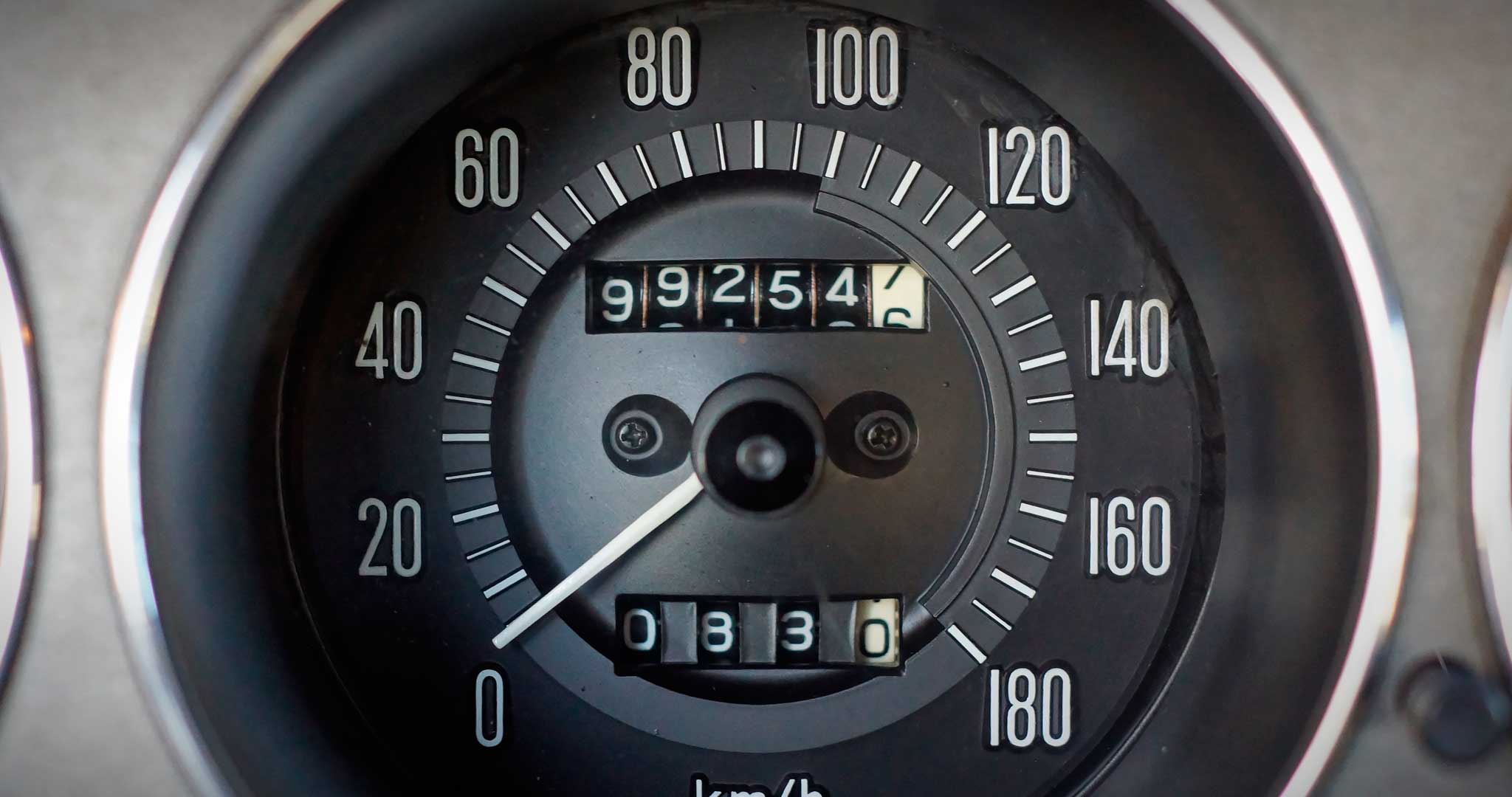
From 0 to100
Measuring speed? Overrated! Or so it seemed in the early days of motoring. Cars were still slow enough for drivers to get by on their senses. You could feel the car move and sense it picking up speed. Putting an exact figure on that speed was another matter.
That changed on October 7, 1902, when Otto Schulze patented a method for measuring speed accurately in Berlin. A flexible shaft driven by one of the car’s wheels spins a magnet. Just above it sits a metal cup attached to the needle. The spinning magnet induces eddy currents in the cup, creating a torque that pulls it in the same direction. A spring holds it back, so the cup turns only partway. The faster the magnet spins, the farther the needle moves up the scale.
At first, the speedometer was an expensive extra. By 1910, Ford was already offering it as standard equipment. Crashes were becoming more frequent, and the authorities responded by imposing speed limits.
Before long, the speedometer became a styling feature in its own right, and legibility sometimes took a back seat. The Ford Consul of the 1970s is a case in point. Its deeply recessed instruments are hard to read if you sit a little too high or happen to be tall. In early Porsche 911s, the steering wheel can get in the way of the speedometer. If you have to shift around in your seat just to see how fast you’re going, you might as well keep your eyes on the road.
 DE
 EN