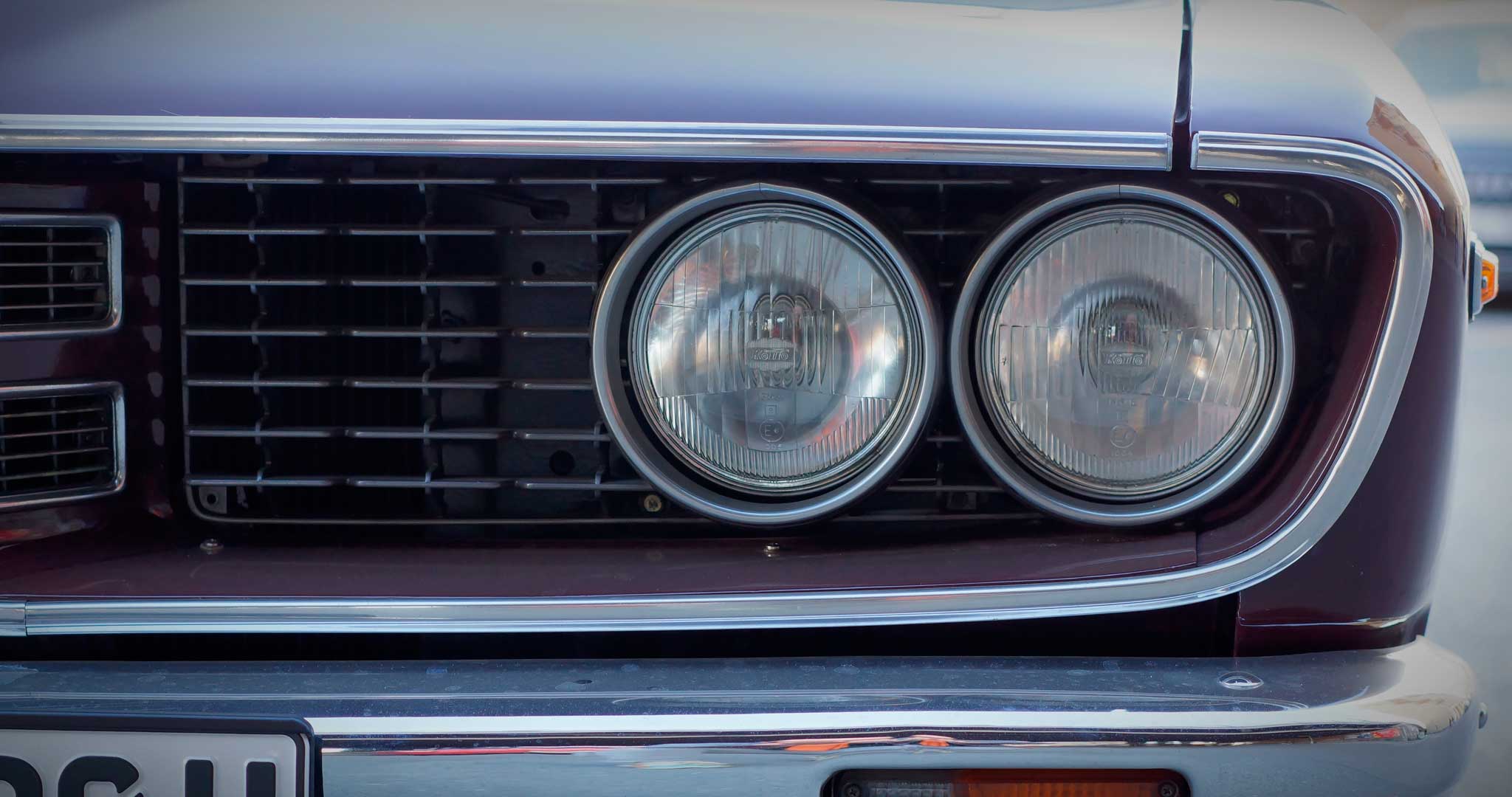
Design of the Seventies
Few objects capture the spirit of an era as neatly as the Coke bottle. Design has always given form to the mood of its time. Think of Art Nouveau, Bauhaus or Art Deco. Each movement contains enough variations to reward a closer look.
But what exactly is Coke-bottle styling?
Its roots go back to the 1930s, when Art Deco brought sweeping curves to automotive design. As designers moved beyond purely functional forms, they explored how a car could look more elegant while meeting emerging demands such as aerodynamics. French marques led the way, with Bugatti, Voisin, Delahaye and Delage among the standouts. Hispano-Suiza and Tatra also produced some of the era’s most distinctive cars. The period was a particular focus of Peter Mullin’s collection in Oxnard, California.
The Second World War interrupted that evolution, and the next major wave of innovation in automotive styling came in the 1950s. The United States set the pace. European subsidiaries such as Opel and Ford’s European operations brought American engineering and styling cues from their parent companies, General Motors and Ford, to European roads well into the mid-1970s. As prosperity returned to Europe, so did an appetite for exuberant design. A car could express how you felt about life and make sure the neighbors knew it.
Chrome was everywhere. Designers borrowed shapes from aircraft and drew on the sensual curves of the female figure. At the same time, a more rational design language was taking shape, especially in Italy, where Bertone, Giugiaro and Pininfarina were among its leading exponents.
Coke-bottle styling grew out of the flamboyant forms of the 1950s and ’60s. Its signature was a body that pinched in at the waist and swelled out again over the wheels, echoing the contours of the glass bottle. By the late 1960s, those lines had become a familiar sight on American performance cars, from the Shelby Cobra to muscle cars such as the Dodge Charger and Pontiac GTO.
 DE
 EN